

How To Use A Sponge Filter
Sponge filters are one of the most popular filters used in fish stores, fish rooms, and breeding tanks because they're then reliable and easy to use. Only beginners often have many questions on how they piece of work, how to set one up, and how to keep them clean. Check out our step-by-step instructions to help you get started with your first sponge filter.
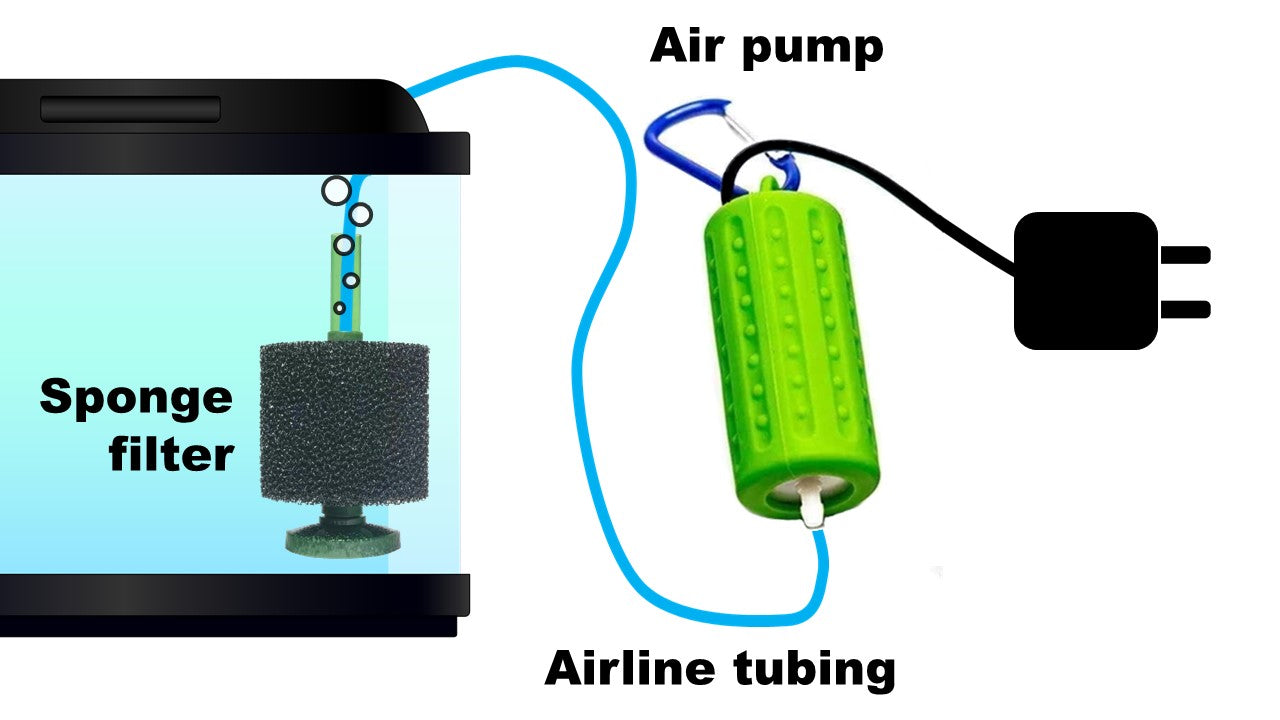
Sponge filter setup diagram
What is a Sponge Filter?
This almost basic of all filters requires at least 3 components: a sponge filter (which sits inside the tank), air pump (which sits exterior the tank), and airline tubing to connect them. The air pump pushes air through the tubing into the hollow cavity inside the sponge filter. Bubbles ascension from the within of the sponge, thus drawing water through the sponge walls. This water suction process mechanically collects debris from the aquarium and gives beneficial leaner place to grow.
Sponge filters are a long-time favorite of both beginner and veteran fish keepers since they're cheap, easy to clean, and hard to interruption since they take very few mechanical parts. Because of the abiding bubbles, information technology provides good water circulation and surface agitation, white beingness gentle enough to avoid sucking upwardly fish fry, shrimp, and other boring-moving creatures. Plus, during power outages, the benign bacteria on the sponge stays in the oxygenated tank water (which gives it a longer chance of surviving), and you lot can even purchase a battery pack fill-in that works with our USB air pump in case of emergencies.
For more than data on filtration options, read our article on fish tank filters and which i you should get.
Do I Need an Air Stone for Sponge Filters?
An air stone is a small weighted accompaniment that diffuses the air from your air pump into smaller bubbles in the water. We recommend adding an air rock to the within of the sponge filter to lessen the bubbling noise and make the filtration more efficient. The air rock creates a steady stream of tiny bubbles (instead of large, intermittent bubbling) that produces constant lift in the sponge filter – much like a continuously running escalator (versus an elevator that starts and stops all the time).
How to Ready Up a Sponge Filter
- Take apart the sponge filter and remove the plastic strainer from the inside of the foam.

- Remove the bullseye from the top of the strainer, and put the air stone at the bottom of the strainer. Connect the air stone to the nipple or middle of the bullseye using a small length of airline tubing. If the sponge filter is very small, y'all can just connect the air rock directly to the bullseye.
- Snap the bullseye onto the superlative of the strainer, put the strainer dorsum inside the foam, and and then connect the strainer to the weighted base of operations of the sponge filter.
- Slip the lift tube over one end of the airline tubing gyre and connect the airline tubing to the nipple on the tiptop of the bullseye. So snap the lift tube onto the bullseye.
- Identify the sponge filter into the aquarium and squeeze out any bubbling from the foam if it'southward floating.
- Identify the air pump in its concluding location exterior of the tank, and so cut the airline tubing roll (attached to the sponge filter) to the proper length so that it's long enough to reach the air pump. Connect the newly cut air tubing from the sponge filter to the air pump.
- If the air pump is located below the top of the aquarium, you need to add a check valve to prevent water from flowing into the airline tubing whenever the air pump is turned off or the power is out. Cut the airline tubing (betwixt the sponge filter and air pump) a few inches outside of the aquarium, and then attach the check valve in between and then that the stop of the bank check valve with the flapper (looks like a colored or horizontal bar ordinarily) is facing the air pump. (If yous install it backwards, no air volition menses when you turn on the air pump, then merely flip it effectually.)

- Create a drip loop with the ability cablevision of the air pump (to ensure moisture will not brand contact with the plug), and then plug in the air pump. Within a few seconds, you lot should see bubbles coming from your sponge filter.
Why Are Bubbles Coming out of the Side of the Sponge?
In that location are several reasons why this could be happening, so try checking the following:
- Did you shorten or remove the lift tube? A shorter elevator tube does non have as much suction pulling bubbles upwardly the center column, so some air may escape.
- Is the air stone crooked within the sponge filter? To make it hang straighter, you lot may need to shorten the tubing attaching the air rock to the bullseye.
- Is the air pressure from the air pump also strong? If a bunch of air is forced into the sponge filter, excess bubbling may leak out the sides.
Which Sponge Filter Do You Recommend?
Sponge filters are a pretty basic slice of equipment, so at that place's not a lot of difference between brands. Even so, afterward a decade of using tons of sponge filters, we made our own with all the improvements and features that we've e'er wanted. We designed the base and lift tube with a light-green color to alloy in with planted tanks and easily hide dark-green algae growth, whereas the foam sponge is black to best conceal fish waste matter and detritus that gets sucked in.
The sponge is made with a fibroid foam of 20 ppi medium porosity to hands collect particulate from the water without clogging upwardly as well speedily. The surface expanse is platonic for shrimp and fish to graze on and clean. Plus, the coarse sponge doesn't trap as much air, allowing it to get nice water flow and sink immediately. (Fine sponges oft have problems with floating, which tin can cause lack of oxygen in your aquarium and potentially loss of life.)
All of the sponge filters nosotros sell are hollow inside and tall plenty so that you can install an air rock inside for more than efficient filtration and quieter bubbles. Likewise, if you remove the lift tube, you can connect another sponge filter on tiptop (without its base) to increment filtration chapters. These sponges can exist customized in multiple configurations, since three of the sponge sizes (all except for the nano sponge) can be mix and matched together. The reward of stacking multiple sponges (versus running them separately) is that they can run off a single air pump line. Then, if y'all ever need to prepare a hospital tank, simply remove one sponge from the stack and it's already seeded with benign bacteria to aid the quarantined fish.
How to Clean a Sponge Filter
Yes, a sponge filter helps to clean your aquarium, but it's substantially like a trash can that collects waste and needs to exist emptied out every once in a while. We recommend cleaning your sponge filter once a month or whenever you see a decrease in bubbles (which is caused by the foam getting clogged upward with detritus).
- When taking the sponge filter autonomously, disconnect the bullseye from the strainer (i.east., take off the whole top part of the filter) then yous can easily remove the foam office for cleaning.
- Employ a plastic bag to scoop the foam out of the water so that the detritus won't spread and make a big mess in the aquarium.
- Squeeze and wring out the foam several times in old tank water.
- Reassemble the sponge filter and put it back in the tank.
- If there are lots of particles floating in the water, just wait an hour or so for the sponge filter to clean information technology up.
Sponge filters are easy to employ, budget-friendly, and very reliable compared to other filter types. If you oasis't tried one yet, check out our line of sponge filters and let us know what you think!

How To Use A Sponge Filter,
Source: https://www.aquariumcoop.com/blogs/aquarium/sponge-filters-the-easiest-fish-tank-filter-ever
Posted by: nealshaterinew1954.blogspot.com
0 Response to "How To Use A Sponge Filter"
Post a Comment